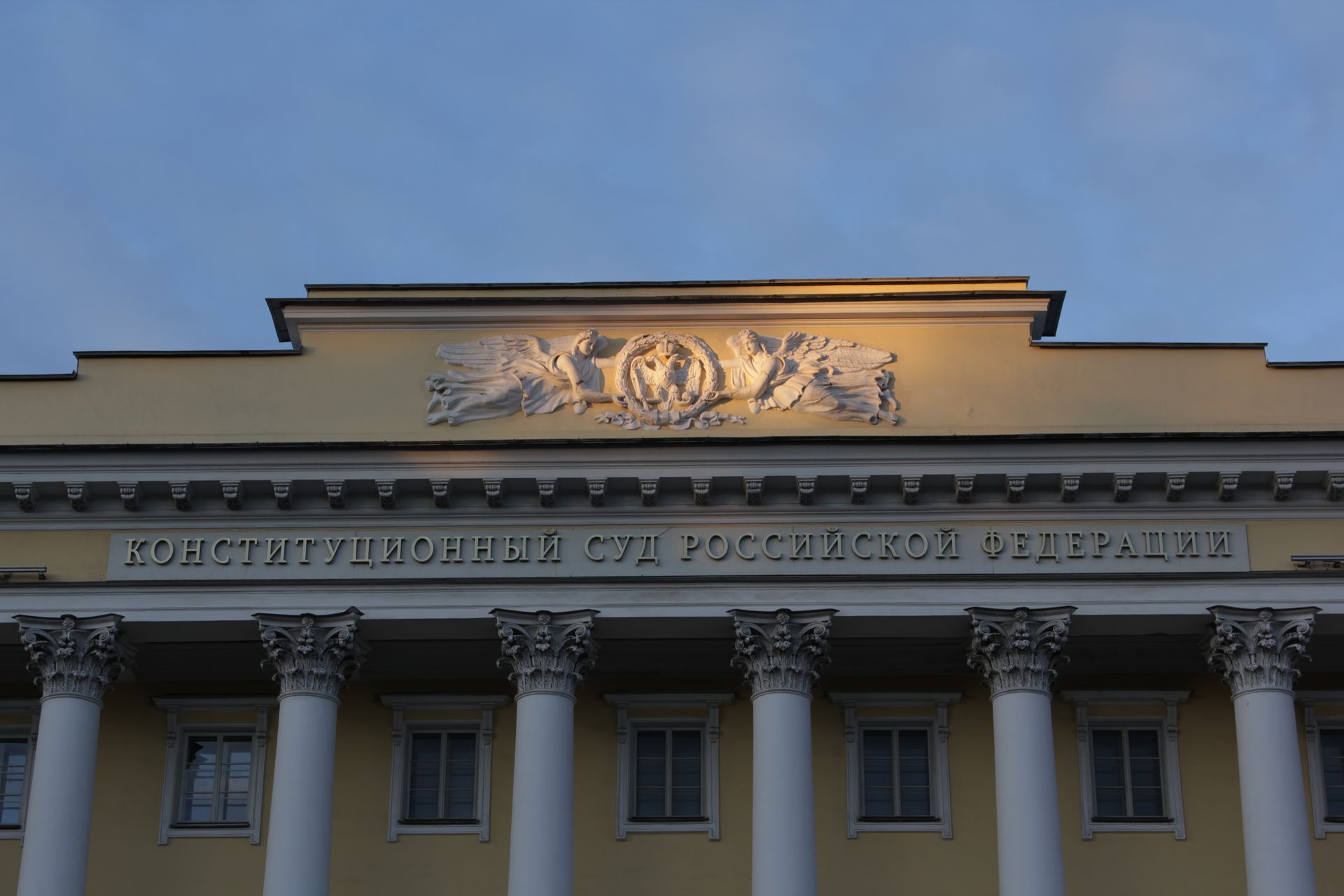
 On 11 February 2026, the Constitutional Court of the Russian Federation adopted Judgement No.6-П in accordance with Article 47.1 of the Federal Constitutional Law “On the Constitutional Court of the Russian Federation”. The case on the review of constitutionality of Article 3, Article 45 and Article 108 (part 3) of the Code of Administrative Judicial Procedure of the Russian Federation was considered in connection with the complaint of the Autonomous Non-Commercial Organisation «Center for Monitoring and Control over Pricing».
Factual background
During the proceedings in an administrative case challenging legal act in the field of tariff regulation in the electric power industry, at the applicant's request, the Supreme Court of the Republic of North Ossetia – Alania, commissioned a forensic examination Autonomous Non-Commercial Organisation «Center for Monitoring and Control over Pricing». The cost of the examination was set at over 4,5 million rubles. Subsequently, taking into account that not all of the expert conclusions were relied upon in the decision, the court of first instance ordered a payment of approximately 3 million rubles to be transferred to the expert organisation’s account.
In 2024, the appellate court found this payment to be excessive and reduced it to 520,000 rubles, reasoning that the amount of remuneration was unreasonable in light of the sums paid for conducting similar examinations to experts of state forensic expert institutions. The applicant appealed this decision unsuccessfully. The applicant filed a complaint with the Constitutional Court of the Russian Federation. According to the applicant, the contested provisions permit courts to unjustifiably reduce the amount of expert remuneration established by the court and agreed upon with the expert organization.
Position of the Court
Experts must be guaranteed the right to fair remuneration and reimbursement of expenses. Restrictions on the rights and freedoms of participants in judicial proceedings, including experts, are permissible only in cases where they are consistent with specific constitutionally significant objectives.
As a general rule, payment for an expert examination is guaranteed precisely in the amount agreed upon in advance. However, courts are not precluded from reducing excessive court costs so as not to impede access to justice and the realisation of the right to judicial protection. The court bears the obligation to monitor the justifiability and proportionality of such amounts, even though at the time the expert examination is ordered it may be difficult to assess the necessity of particular costs for its conduct. The court may evaluate the reasonableness of previously determined payments to the expert after reviewing the expert’s report. This is necessary to maintain a balance between the procedural rights and obligations of the participants in the proceedings.
Law enforcement practice demonstrates that when courts reduce payments to non- governmental experts, they typically rely on the normatively established criteria for determining the cost of examinations conducted by specialists from state forensic expert institutions. However, the cost of services provided by non- governmental organisations is formed on the basis of market principles, which do not carry the same meaning for analogous state institutions.
The challenged law does not contain provisions establishing the authority of a court to reduce the previously agreed upon and approved amount of payment after the examination has been conducted, nor does it define normative criteria for such a reduction. This undermines the legitimate expectations and trust of non- governmental expert organisations in judicial actions, which may reduce the scope and quality of available services in this field and, consequently, diminish the level of guarantees provided for effective judicial protection of the rights, freedoms, and legitimate interests of citizens.
Thus, this gap hinders the realisation of constitutional rights and freedoms, including the right to judicial protection, and its elimination requires appropriate remedial measures. Therefore Article 108 (part 3) of the Code of Administrative Judicial Procedure is incompatible with the Constitution of the Russian Federation.
The legislator should establish criteria for the admissibility of reducing the monetary amounts due to experts. Until these changes are made, a court may reduce the amount of payment to an expert after examining the expert report, either on its own initiative, taking into account the opinions of the persons participating in the case, or upon a request by such persons. Such a reduction is permissible if it is established that the submitted expert examination is incomplete (proportionally to the actual work performed), that certain conclusions of the expert are inconsistent with the provisions of legal acts, or if the expenses for the expert examination are found to be clearly unreasonable (excessive) in light of the cost of similar services provided by other expert organisations. In such cases, the expert organisation is entitled to submit additional justification to the court regarding the amount of payment, and the court is obliged to assess the documents and arguments.
Proceedings concerning Articles 3 and 45 of the Code of Administrative Judicial Procedure have been terminated, as these provisions do not regulate the determination of the amount of payment and cannot be considered as violating the applicant’s constitutional rights.
Press Service of the Constitutional Court of the Russian Federation