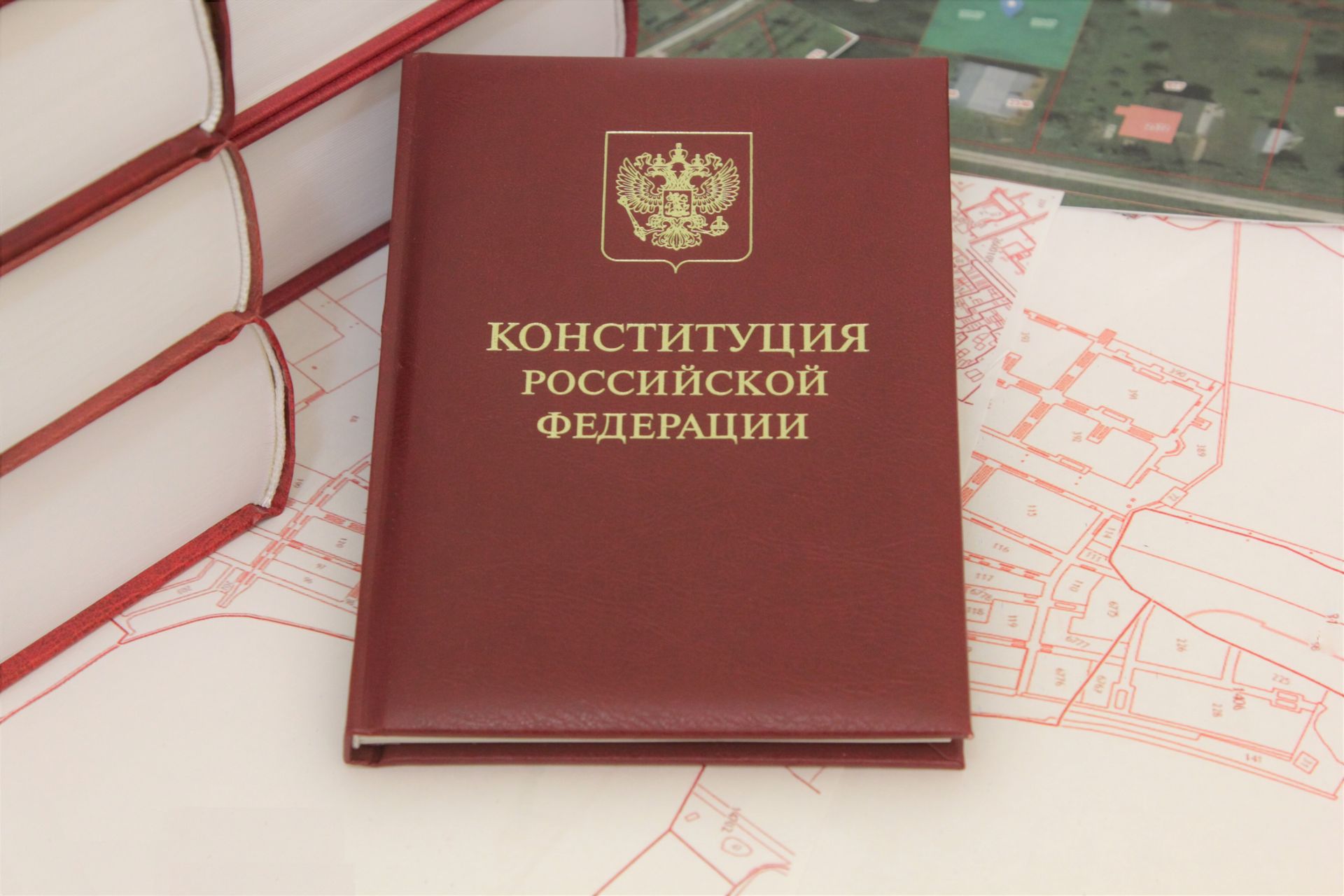
 On 1 December 2025 the Constitutional Court of the Russian Federation adopted Judgement No.42-П in accordance with Article 47.1 of the Federal Constitutional Law «On the Constitutional Court of the Russian Federation». The case on the review of constitutionality of Article 26 (part 23) of the Federal Law «On Amendments to the Urban Planning Code of the Russian Federation and Certain Legislative Acts of the Russian Federation» was considered in connection with a complaint of citizen M.A.Malinov.
Factual background
Mikhail Malinov purchased a land plot for the private housing construction in the village of Prokhorovo in the Moscow Region. However, in 2015, the regional government approved the boundaries of the zone of regional cultural heritage object «Prince Trubetskoy Manor, Spasskoye-Prokhorovo» where construction of new buildings prohibited. The applicant's plot fell within these boundaries, as he later discovered during an unsuccessful attempt to obtain a building permit. Due to the impossibility of using the plot in accordance with its permitted use, applicant appealed to the regional government to purchase the plot, but his request was denied. The courts ruled that there was no legal basis for imposing on the public authority obligation for purchase of the plot, as the protected zone of the cultural heritage object were established before 4 August 2018, the date of the official publication of the contested Federal Law.
Position of the Court
The protection of cultural heritage objects is a constitutionally significant value and a priority for the public authorities. Limiting private property rights to preserve historical and cultural monuments requires achieving and maintaining a balance between personal and public interests while strictly adhering to the constitutional principles of fairness, reasonableness, and proportionality. This is guaranteed by legal procedures.
In 2018, the contested Federal Law amended and supplemented the Land Code of the Russian Federation. In particular, Article 107 (item 7) of the Land Code was amended by the right of a landowner to demand that public authorities purchase the land if the establishment or modification of a zone with special conditions for the use of the territory makes it impossible to use the land in accordance with its permitted use. Article 57.1, in its item 8, introduced a list of persons and public entities obligated to compensate the owner for damages. Moreover, the contested provision terminated the effect of these provisions with respect to zones with special conditions for the use of territories established before 4 August 2018. Judicial practice has evolved in such a way that owners of plots within the boundaries of cultural heritage objects protection zones prior to this date are deprived of the right to compensation for damages.
In 2020, in Judgment No. 11-П, the Constitutional Court of the Russian Federation stated that Article 57.1 is not an innovation. It orders the application of the previous legal regulations and defines the specifics of compensation for damages when the rights of plot owners are restricted due to the establishment or modification of zones with special conditions for the use of these territories. Article 57 of the Land Code provides a mechanism for compensating these damages, including when rights are restricted. Accordingly, in its content, Article 57.1 is a special case of the rule enshrined in Article 57. Any other interpretation would not contribute to maintaining a balance between private and public interests or to maintaining legal certainty.
Article 57 of the Land Code of the Russian Federation, both the version in effect at the time the Moscow Oblast Government approved the boundaries of the protected zones for the cultural heritage sites in the village of Prokhorovo in 2015, and its current version, provides for full compensation for damages to landowners when their rights are restricted. This rule, in the applicant's case, could not be interpreted as precluding such compensation or nullifying the guarantees of private property rights.
An analysis of the legal relationships associated with the establishment of zones with special conditions for territorial use and restrictions on land plots before and after the enactment of the contested law revealed no fundamental differences requiring different regulations from the legislator. Otherwise, the owners of such land plots would be in different positions and would be given unequal opportunities to protect their rights and interests.
The contested provision does not contradict the Constitution. It does not exempt public law entities from the obligation to compensate the owner of a land plot for damages incurred due to the establishment of protected zones for cultural heritage objects of regional significance prior to the official publication of the disputed law and the impossibility of using the plot in accordance with its permitted use, including, if such use is impossible, by purchasing the plot and any structures on it that are not unauthorized constructions. The legislator is not deprived of the opportunity to specify the procedure for compensation of damages in appropriate cases.
The applicant’s case is subject to review.
Press Service of the Constitutional Court of the Russian Federation